|

Dixie Grand can start from a wide variety of formations, which don't have much in common except that half of the dancers are facing promenade direction and half are facing reverse promenade direction. They may be already holding right hands, as in parallel right-handed waves. They don't have to be directly facing. If they are facing along a rectangular circulate path, that is good enough. For example, from a "Trade By" formation, the end dancers can start a Dixie Grand by turning to face each other for the first pull-by.
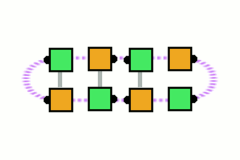
Dixie Grand can also be done from formations where only some of the dancers are facing. Only those who are facing do the right pull-by, then everybody joins in for the left pull-by. In particular, Dixie Grand is frequently done from a "Double Pass Thru" formation, with just the centers facing. The centers start the call with a right pull-by, and then continue with the ends for the left pull-by.
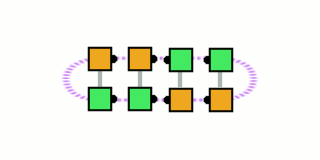
Regardless of the formation from which the dancers start, as they do the pull-by actions they adjust to form a circular formation, and end facing another dancer in that circle, just like the end of a Right and Left Grand.